Isolation_Mode
Isolation_Mode-1
Isolation_Mode-2

Post Disaster Recommendations

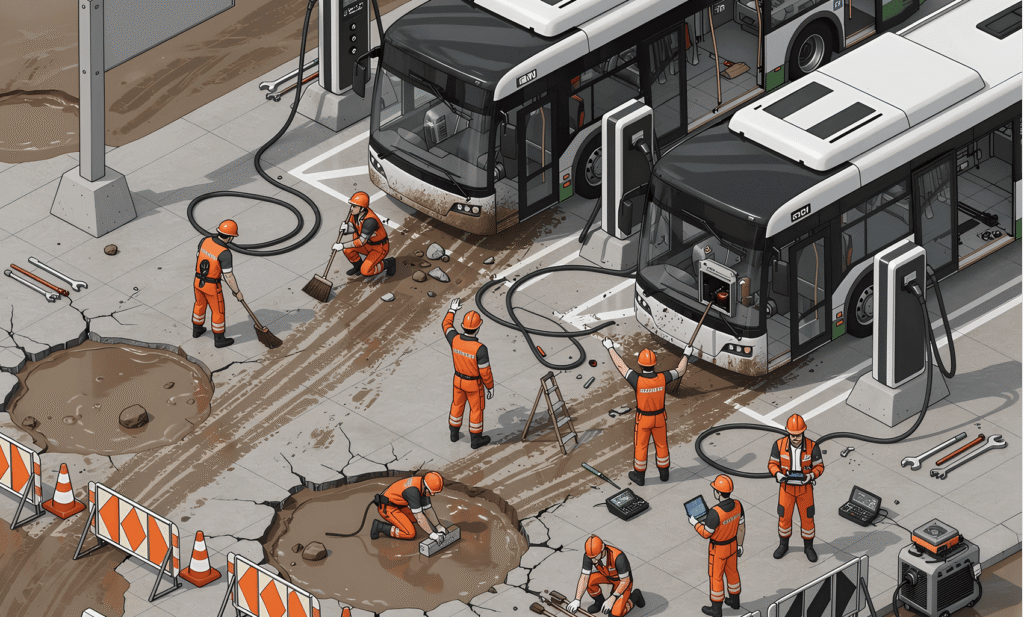
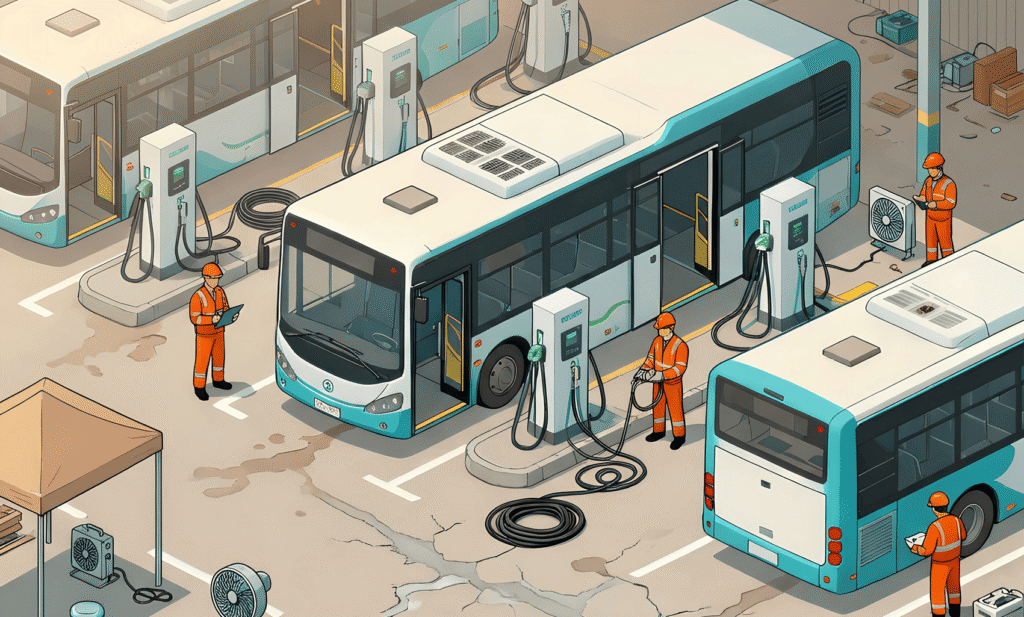
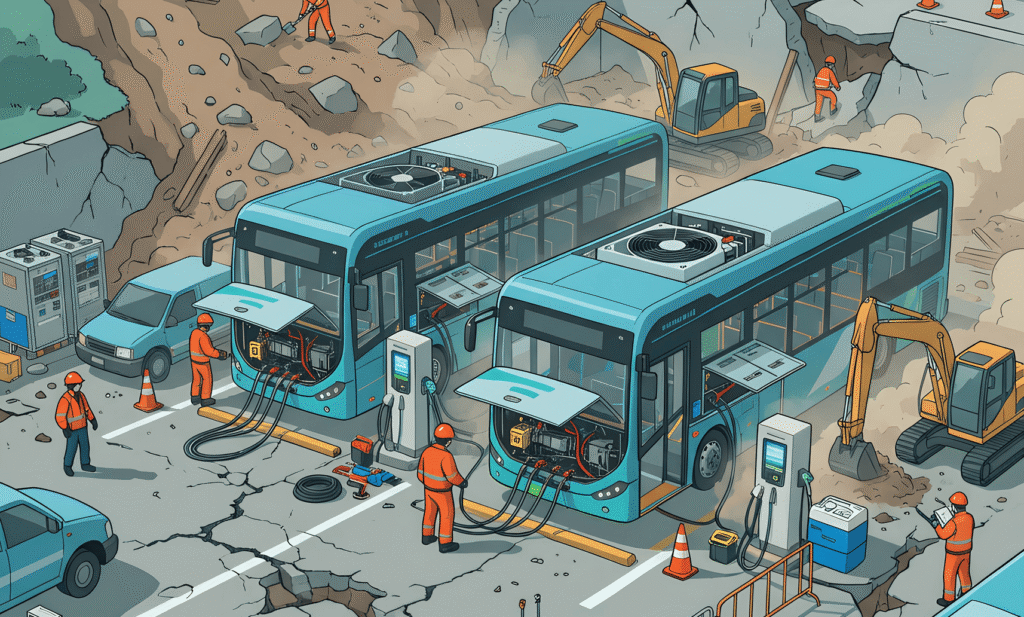
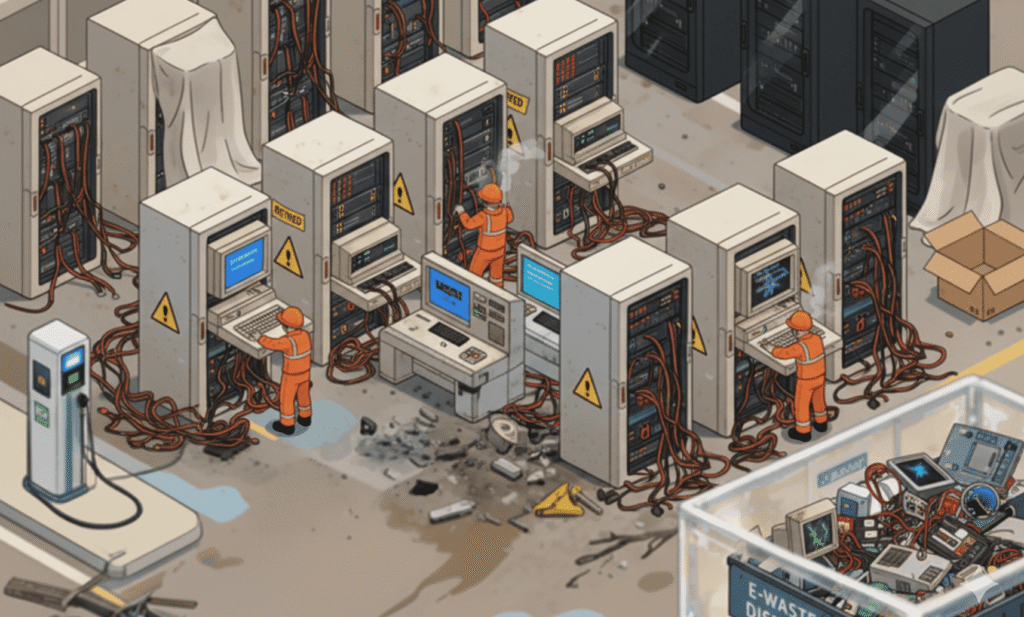
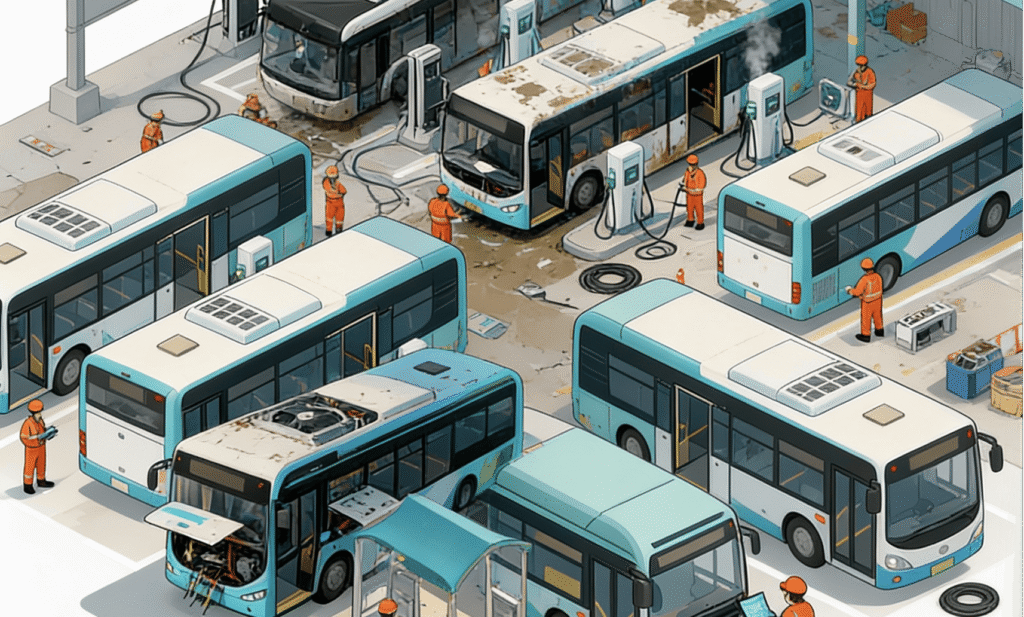
The framework outlines standardized post disaster response protocols across four major components: E-Bus, Charging Infrastructure, Depot, and Enroute Operations. Each component follows a structured sequence of recovery and rehabilitation actions after any hazard event (floods, heatwaves, vandalism, technological hazard etc.). 

The key activities to be undertaken post any hazards are: 

Immediate Isolation for safety & Securing Site 

Activities 

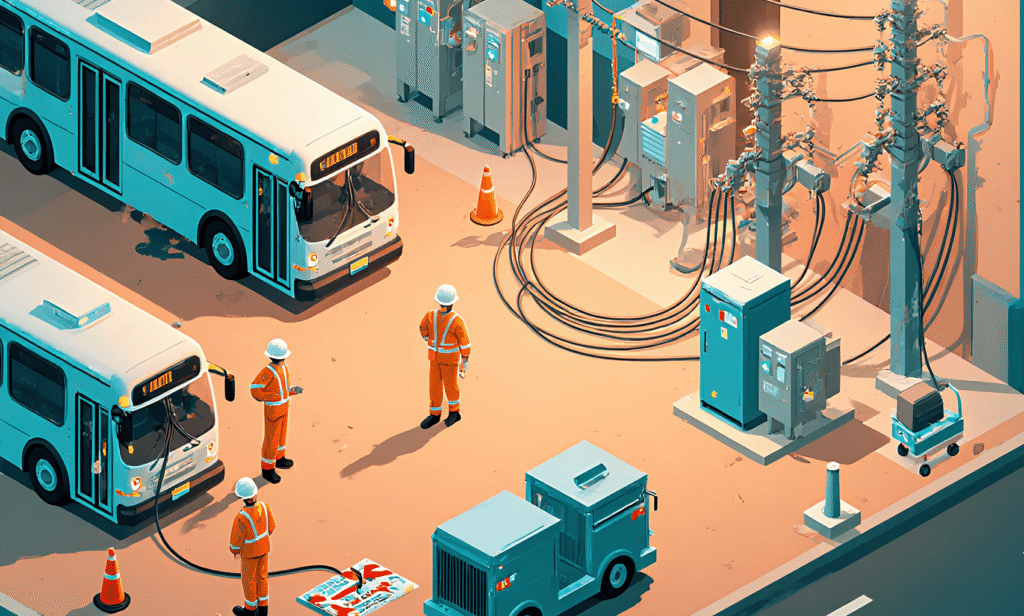
  • Evacuate from and isolate in all affected charger enclosures).
  • Cut off power supply to chargers and non-essential depot systems to prevent cascading failures.
  • Establish physical cordons and signage to restrict unauthorized access.
  • Use lockout/tagout protocols for high-voltage systems (especially relevant for EVs). 

Responsibility 

  • On route – Crew, Emergency response team 
  • At Depots: Depot Manager, Safety Supervisor  

Activities 

  • Conduct a visual inspection of fleet, depot buildings, chargers, and road infrastructure.
  • Record initial damage and safety risks/signs (e.g., battery smoke, collapsed walls, exposed wiring).
  • Deploy OEM-certified technicians for e-bus and charger systems.

Responsibility 

  • Fleet Operator
  • Depot Manager
  • Safety Officer
  • Certified Technician

Activities 

  • Perform system-level diagnostics:
    • Fleet: Batteries, Battery Management System (BMS), traction motors, steering and braking system, communication system and the driver console / dashboard, Lights and signalling devices, door opening/ closing systems, low voltage battery system.
    • Chargers: Insulation resistance, power flow, thermal performance, water ingress.
    • Depot: Electrical panels, water ingress, structural safety.
    • ITS: Data integrity, server uptime, system functionality, communication operability.
  • Use OEM tools to evaluate key systems (BMS, grid connections, server functionality).
  • Categorize assets as: ◻ Safe to operate ◻ Safe with minor repair ◻ Unsafe – needing replacement or further assessment


Responsibility 

  • Engineers – Electrical & Mechanical
  • Chargers: OEM/ Charging Infra Vendor/ Electrical Engineer
  • Grid Infra: DISCOM
  • Depot: Structural engineer, Depot Manager
  • ITS: ITS Vendor / System Integrator
  • Certified Technician / OEMs/ Workshop Staff
  •  

Activities 

  • Deploy standby fleet or reroute services using unaffected assets.
  • Operate temporary/ emergency charging points if primary ones are non-functional.
  • Implement manual dispatching and operations if digital systems are compromised.
  • Maintain deployment of buses to keep critical facilities like hospitals, transit hubs prioritized during limited operations.

Responsibility 

  • PT- Planning & Operations Team

Activities 

  • Clean, repair, and test affected systems before reintroducing into service.
  • Repair, replace or isolate damaged components.
  • Ensure inspections by safety and electrical officials as needed.

Responsibility 

  • Maintenance Team,
  • OEMs
  • Bus Manufactures
  • ITS/ system integrator vendor

Activities 

  • Seek fit to operate certification from:
    • Structural engineers (for depots)
    • OEMs (Certified EV technicians) (for fleet and chargers)
    • Fire or electrical safety officials (for major hazard incidents)
  • Prepare formal documentation of:
    • Incident reports; Technical inspection checklists; Photos, diagnostics, and recommissioning logs
    • File an incident report with: Date, time, location; Bus ID and operator; Sequence of events; Passenger/operator safety outcomes and Initial observations.
    • Submit report to relevant authority as required – Transport Authority / Nodal Agency; Insurer; OEM or supplier; Safety auditor (if mandated)

Responsibility 

  • Structural engineers
  • OEMs, EV technicians
  • Fire or electrical safety officials
  • Safety Officer
  • Operator

Activities 

  • Assess vehicles for repair feasibility and battery reusability
  • Process insurance claims for damage, downtime, or third-party loss.
  • Decommission asset if required.

Responsibility 

  • Bus Operator, Finance & Legal Department

Activities 

  • Following Incidence investigation reports, Revise and update:
    • Standard Operating Procedures (SOPs)
    • Emergency Response Plans (ERPs)
    • Asset risk registers
  • Conduct post-event debriefings and simulation drills.
  • Train depot staff, crew, and emergency teams based on learnings.

Responsibility 

  • Training Cell,
  • Operator,
  • Depot manager
  • Lead Disaster Response Officer

Activities 

  • Identify systemic gaps from post-disaster assessments.
  • Plan for:
    • Infrastructure elevation (for flood-prone depots)
    • Flood Resilience Planning (such as optimum drainage slope, rainwater harvesting)
    • Retaining Structures (For Landslide prone depots)
    • Fire-rated charging enclosures
    • Enhanced backup power and communications
  • Align upgrades with climate and disaster resilience frameworks (e.g., ADB CRRA, NDMA guidelines).

Responsibility 

  • Administration- Bus Transport Agency

Post Hazard Interim Restoration of Services Action Plan 

The following action plan outlines the procedures and responsibilities for ensuring the rapid restoration and continuity of essential e-bus services in the aftermath of a disaster. 

Action Plan for preparing contingency plans for maintaining essential services post disaster 

Responsibility 

Depot Managers & Planning Team 

First Point of Contact 

Control Room / City Disaster Management Cell 

Mode of Communication 

Radio/Phone, Emergency Communication Channel 

Action Plan for preparing contingency plans for maintaining essential services post disaster 

Pre-Assessment:

  • Identify essential service routes to remain operational post disaster including access to hospitals, police stations, emergency shelters, railway station, administrative centres, school, colleges & key Central Business Districts.
  • Prepare a route prioritisation plan categorising service as:
    • Priority 1: Essential Service
    • Priority 2: Desirable Service (Operate as conditions permit)
    • Priority 3: Non-Essential Services (Resume after Stabilisation)
  • Develop alternate route plans in advance for all Priority 1 corridor, ensuring safe diversions around high-risk areas (eg: flood prone areas, low lying roads) or likely obstructions such as fallen trees or stalled vehicles.
  • Map routes with access to charging infrastructure to ensure operational feasibility during reduced or emergency operations.

Pre-Preparedness Protocols:

  • Define roles and responsibilities within the organization for contingency activation, command structure, and reporting hierarchy.
  • Document contingency actions in a structured Contingency Plan (including route maps, priority lists, command hierarchy, and contact details).
  • Integrate contingency plan into city disaster management and emergency mobility frameworks.
  • Conduct mock drills twice a year simulating disaster impact and testing continuity of essential services.
  • Prepare inventory lists for critical spares, tools, and consumables needed for rapid fleet restoration (tyres, cables, fuses, connectors).
  • Review and update the contingency plan annually or after every major disaster, incorporating lessons learned.

Post Incident/ Hazard Protocols:

  • Identify safe depots and charging points on elevated or disaster resilient sites to serve as emergency operation bases.
  • Ensure emergency power backup at critical depots and charging stations (DG sets, battery backups, or mobile chargers).
  • In situations where e-buses become non-operational, alternate fuel-based buses such as ICE or CNG buses may be deployed to maintain service continuity until normal operations are restored.
  • Create emergency bus bridges/ bus ways/ priority lanes and where required dedicated bus lanes on identified emergency routes to enable priority bus movement functioning as a temporary Bus Rapid Transit system to replicate key travel patterns and ensure accessibility.
  • Activate Priority 1 essential routes as soon as safety assessments permit, using pre-identified fleet and drivers trained for post-disaster operations.
  • Execute resource mobilization plan including access to tow vehicles, mobile charging units, and fuel supply chains.
  • Establish clear communication protocols with power utilities, traffic police, and disaster management authorities for coordinated response.
  • Maintain updated contact directories of key personnel, agencies, and vendors for quick coordination.
  • Provide fare-free services on essential routes for a limited period post-disaster to support recovery and ensure accessibility for affected communities.

Post Hazard Assessment Checklist for Components

The following checklist be used for quick damage assessment of EBES during post hazard impact.

Post Disaster Hazard Specific Checklist 

Content / Methodology of event chain mapping

Earthquake/ Landslides 

Components

Post-Disaster Checklist 

Fleet 

  • Water ingress in batteries, electrical systems, cabin, and storage
  • Test braking and steering systems for water damage
  • Rust/corrosion signs in undercarriage and connectors

Depot

  • Inspect electrical control rooms, substations, and wiring for short circuits
  • Drain water, clean oil pits, and disinfect
  • Damage to stored spare parts, diesel tanks (if hybrid)

Charging Infrastucture

  • Test chargers for moisture damage
  • Ensure earthing, surge protection, and insulation is intact
  • Clean connectors and recheck voltage output before resuming

Operating  Environment 

  • Assess road subgrade and surface damage
  • Check water stagnation near bus stops, terminals
  • Coordinate with drainage departments for future risk mitigation

Earthquake/ Landslides 

Components

Post-Disaster Checklist 

Fleet 

  • Check battery thermal profiles and BMS logs
  • Inspect HVAC systems and cabin insulation
  • Monitor for overheating signs on high-temp days

Depot

  • Inspect staff working areas for ventilation adequacy
  • Ensure shaded parking, cool zones, and fans are operational
  • Verify fire safety and emergency response equipment

Charging Infrastucture

  • Monitor heat damage to charging cables, terminals
  • Review operational logs for charger overheating shutdowns
  • Confirm air conditioning/cooling systems for chargers are functional

Operating  Environment 

  • Check road surface integrity (melting asphalt, cracks)
  • Ensure emergency water, first-aid, and heat protection gear at bus stops
  • Assess traffic delays due to heat-related incidents

Earthquake/ Landslides 

Components

Post-Disaster Checklist 

Fleet 

  • Inspect vehicle structure, steering alignment, and suspension
  • Ensure onboard electronics and displays are not shaken loose
  • Check emergency egress functions and fire suppression systems

Depot

  • Check building cracks, slab displacements, wall collapses
  • Inspect underground storage, tanks, and pit alignment
  • Test power supply and water pipelines for damage

Charging Infrastucture

  • Verify anchoring of chargers and switchboards
  • Conduct safety test on transformers and power distribution units
  • Inspect cable trays, junction boxes, and connectors

Operating  Environment 

  • Evaluate road damage, slope stability, and risk of aftershocks
  • Deploy traffic control if route sections are unusable
  • Install warning signage and barriers as needed

Earthquake/ Landslides 

Components

Post-Disaster Checklist 

Fleet 

  • Isolate affected vehicles immediately
  • Inspect fire suppression systems
  • Review battery management system logs and failure points
  • Perform thermal imaging scan on nearby vehicles

Depot

  • Assess fire spread, smoke damage, and ventilation
  • Review placement of fire extinguishers and hydrants
  • Check alarm and emergency alert systems functioned correctly

Charging Infrastucture

  • Examine charger casing, cooling system, and cable burns
  • Test power supply stability and short-circuit protection
  • Review fire origin to isolate systemic issue

Operating  Environment 

  • Notify and reroute buses from affected routes
  • Clean up smoke-damaged stations or infrastructure
  • Coordinate with local emergency/fire departments for inspection

Earthquake/ Landslides 

Components

Post-Disaster Checklist 

Fleet 

  • Check if any battery malfunctions or communication losses occurred during outage
  • Ensure power-dependent systems (HVAC, doors, telematics) are functional
  • Update software logs for power cut response tracking

Depot

  • Inspect UPS, backup generators for fuel levels and performance
  • Test depot lighting, control systems post-outage
  • Restart systems in phased manner to avoid surge overload

Charging Infrastucture

  • Review charger restart logs for incomplete sessions or faults
  • Calibrate chargers and test voltage stability before resuming
  • Inspect grid interface, breakers, and fuses for tripping/damage

Operating  Environment 

  • Identify traffic disruptions due to signal blackout or ITS failure
  • Coordinate with DISCOMs for outage reporting and future backup planning
  • Assess impact on passenger information systems (PIS, AFC, GPS)

Earthquake/ Landslides 

Components

Post-Disaster Checklist 

Fleet 

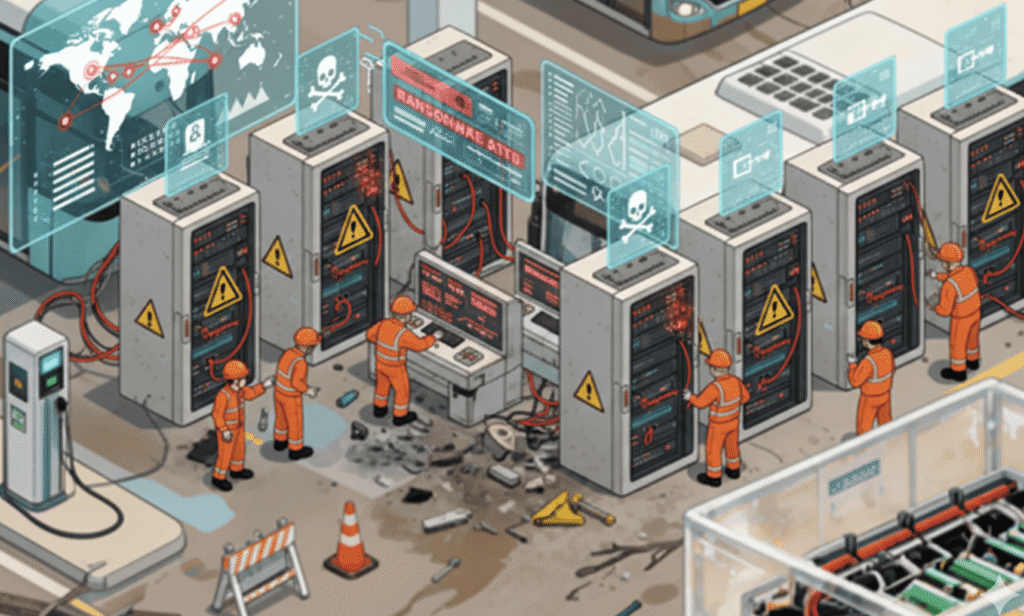
  • Scan vehicle software for unauthorized access or code
  • Reset and patch onboard systems if breached
  • Check GPS, telematics, and control software for anomalies

Depot

  • Audit all access points and login logs
  • Reset credentials and install patches
  • Ensure firewall and endpoint protection are updated

Charging Infrastucture

  • Validate charger firmware integrity
  • Reboot and test for secure remote access
  • Block malicious IPs or access logs identified

Operating  Environment 

  • Check ITS, CCTV, AFC systems for breach indicators
  • Restore backup data and logs
  • Inform cybersecurity agency or certifying authority for investigation

Earthquake/ Landslides 

Components

Post-Disaster Checklist 

Fleet 

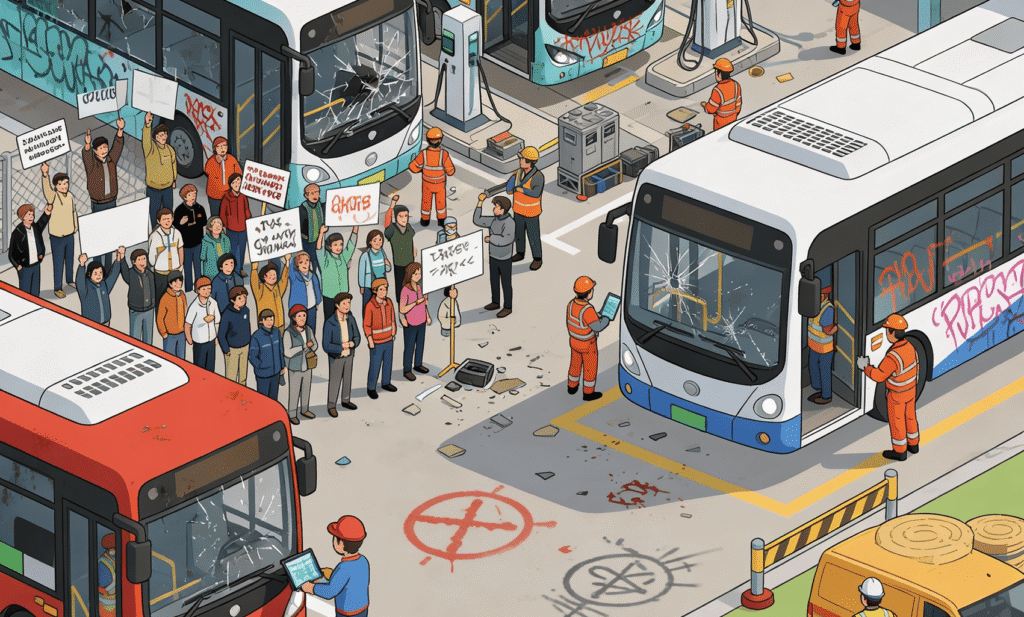
  • Inspect vehicles for window, light, or panel damage
  • Secure missing or stolen components
  • Review CCTV footage (if available)

Depot

  • Assess perimeter fencing, locks, gate access
  • Reinstall broken equipment or systems
  • File police complaint and insurance claims

Charging Infrastucture

  • Check for severed cables, broken panels, or disabled screens
  • Secure and test grounding, insulation, and alarms
  • Document and photograph all damages

Operating  Environment 

  • Replace broken signage, station furniture
  • Clear debris and make environment safe for public access
  • Reinforce law enforcement presence if needed

Earthquake/ Landslides 

Components

Post-Disaster Checklist 

Fleet 

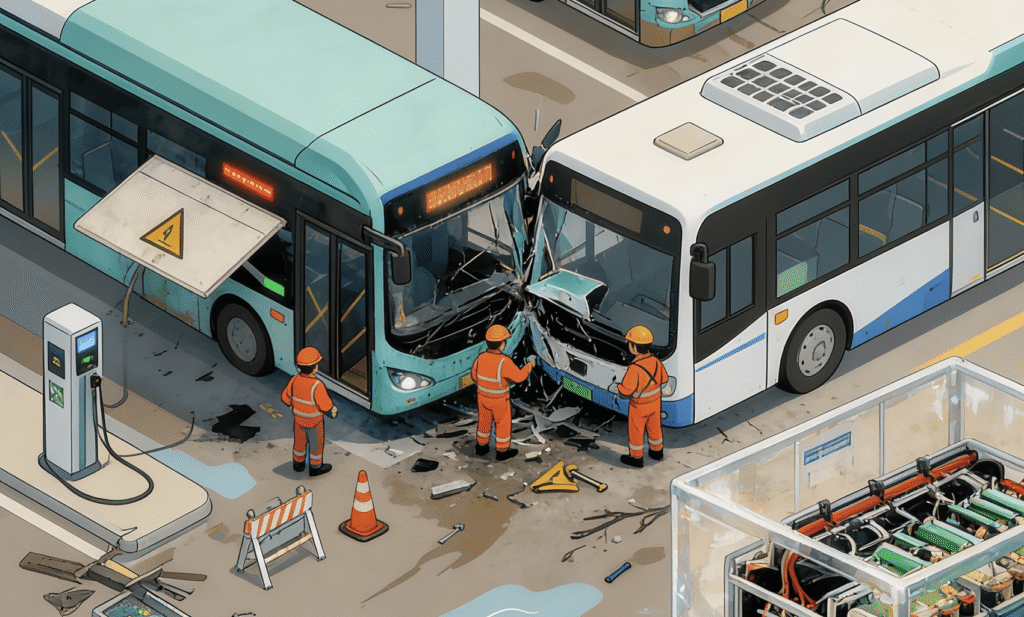
  • Assess structural, suspension, and electrical damage
  • Inspect safety systems – cameras, indicators, brakes
  • Conduct accident root-cause analysis

Depot

  • Evaluate impact on scheduling, vehicle deployment
  • Conduct incident report and insurance processing
  • Review driver training effectiveness

Charging Infrastucture

  • Check if crash occurred near charging points
  • Verify if any pole, signage, or power systems were affected
  • Test system for short-circuit or surge risk

Operating  Environment 

  • Inspect site of accident for road repair needs
  • Reassess speed limits and signage
  • Coordinate with traffic police for improved safety

Earthquake/ Landslides 

Components

Post-Disaster Checklist 

Fleet 

  • Review logs for driver errors, misuse of systems, or deviation from SOPs
  • Inspect for improper battery charging, overloading, or operational misuse
  • Conduct refresher training if patterns are observed

Depot

  • Check shift logs, maintenance records for skipped tasks or errors
  • Verify inventory handling (spare parts, fuel, chemicals) is proper
  • Audit operational SOP adherence by staff and contractors

Charging Infrastucture

  • Inspect for manual override incidents or improper charging practices
  • Review logs for skipped maintenance or software tampering
  • Recalibrate or reset chargers as needed

Operating  Environment 

  • Assess ITS, CCTV, and station safety protocols violated
  • Verify if SOPs for passenger handling, emergency response were followed
  • Document lapses and initiate disciplinary or corrective measures