Grid Instability

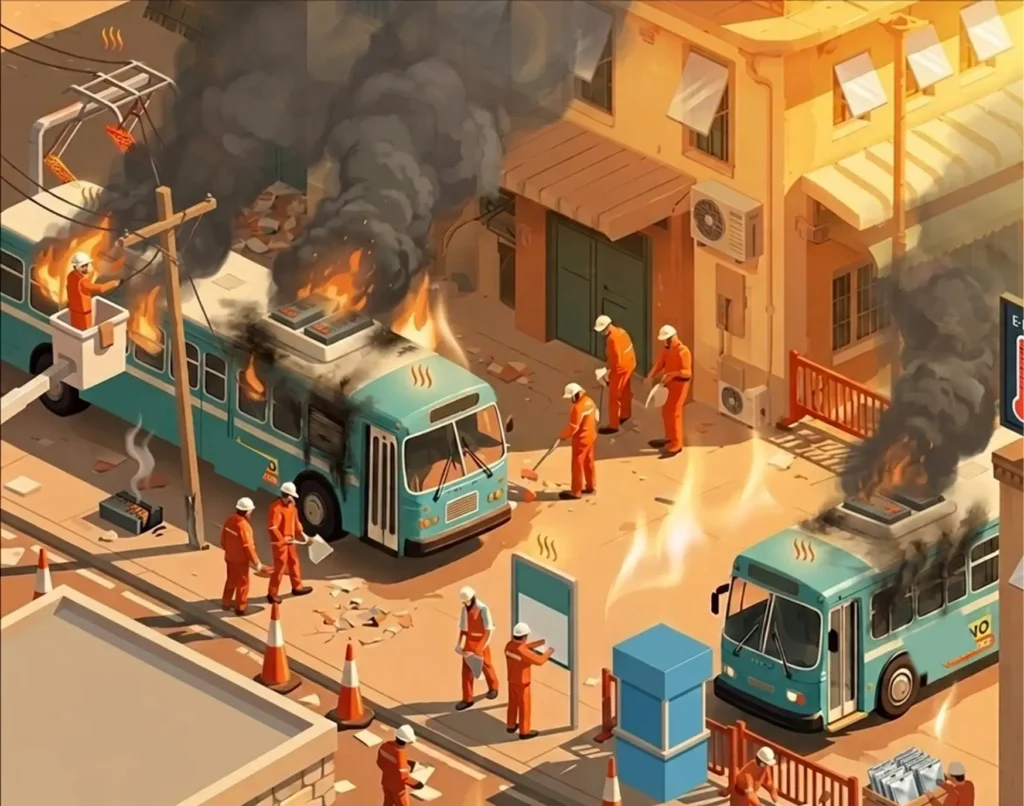
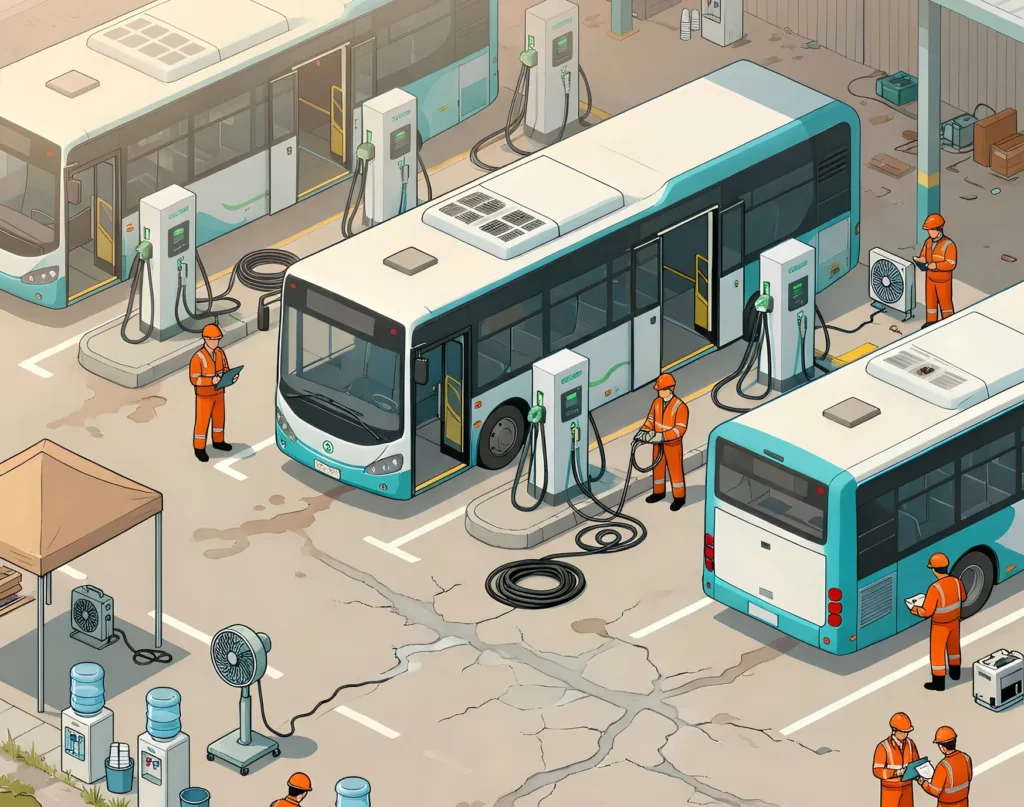
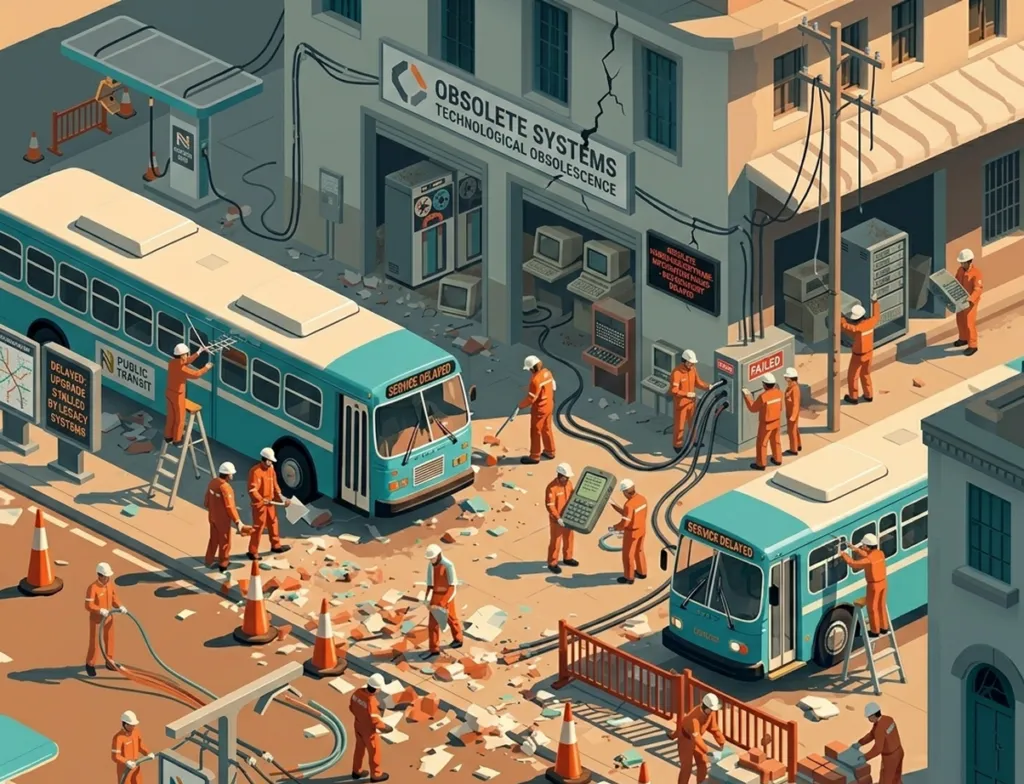
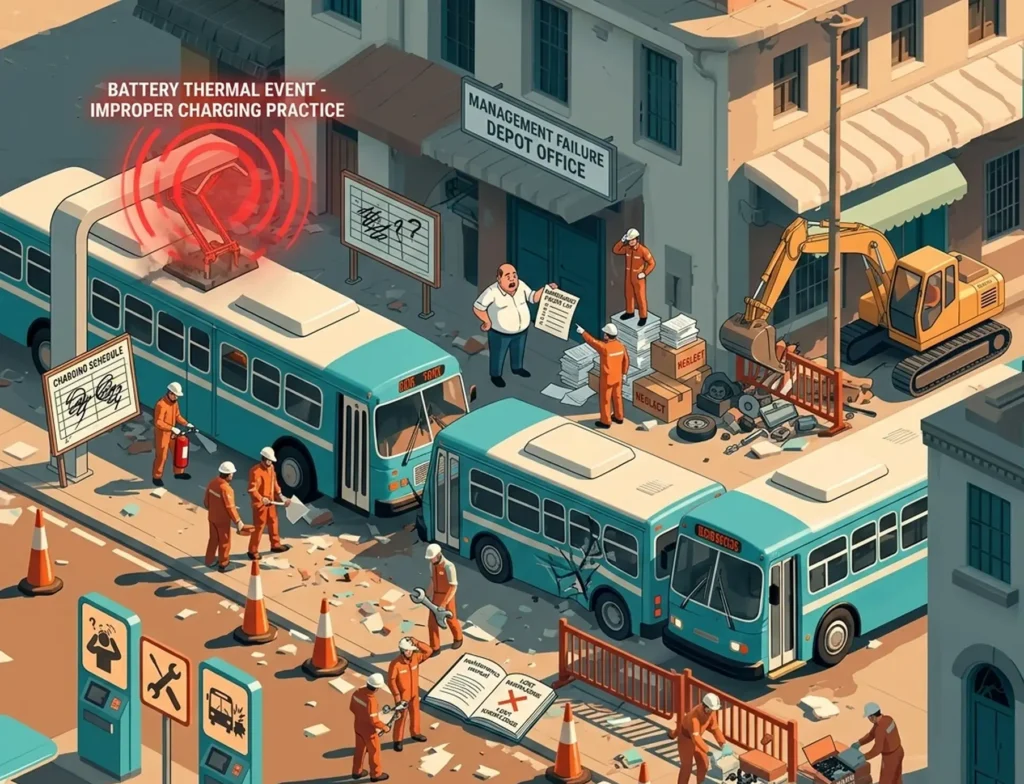
Grid instability poses systematic risks across the EBES components. Power fluctuations and outages can disrupt charging operations, degrade battery health, trigger electrical faults and delays service schedules. Overall, grid instability leads to service delays, passenger inconvenience, and safety risks due to insufficient charge buffers. Explore the expendables sections to see detailed preventive, responsive and recovery measures for the Grid Instability hazard and for each component (Fleet, Depot, Charging Infrastructure & Operating Environment).


E Bus Ecosystem

Risk or Impact of Hazard​

Prevention Measures

Battery Cell abuse leading to Bus fire/ thermal runaway

Installation of Battery Management System, configure for automatic cut off for over/undervoltage fluctuations

Onboard electronics failure causing short circuits, overloads & over-discharges.

Usage of LiFPo (Lithium-Ion Phosphate) Batteries for better thermal stability

Regularly update firmware for power fluctuation protection

Stranded Buses – Buses enroute may not be complete trips

Maintain 30-40% SoC reserve at all times

Response Action during hazard occurrence

Response Protocols for fleet On unsafe voltage/ frequency is detected while charging

Response Protocols for personnel safety and evacuation in case of low battery enroute.

Recovery and Restoration post hazard

  • Check BMS logs for fault/error codes.
  • Perform BMS diagnostics for any bus charging during instability
  • Review trip data for anomalies in performance
  • Resume to normal charging gradually

Response Action during hazard occurrence

PT- Procurement team

Charging Operator

Safety & Firefighting Team

Risk or Impact of Hazard​

Prevention Measures

Safety Hazards from short circuit or tripping of breakers

Compartmentalization with fire protect barrier

Train staff on safe isolation procedures.

Early communication with DISCOM for advance outage alerts.

Inability to Dispatch Buses as per schedule

Maintain staggered charging schedules to avoid overloading.
-Keep emergency power backup (BESS/generator).

Response Action during hazard occurrence

SOPs for Depot operations During power outage

  • Pause all on-essential power use
  • Prioritize charging for emergency buses
  • Communicate real-time charging status to operations control.

Recovery and Restoration post hazard

  • Inspect depot electrical distribution & grounding systems.
  • Resume phased charging to avoid sudden load.
  • Update preventive SOPs based on incident review.

Response Action during hazard occurrence

PT- Procurement Team

PT- Depot Manager, charging operator

DISCOM

Risk or Impact of Hazard​

Prevention Measures

High-voltage Malfunction, Overheating due to fluctuating voltage /current

Maintain dual/distributed power feeds from DISCOMs to manage incidents of power failures.

Fire/Short Circuit Risk

Install Surge Protection devices and automatic voltage regulators

Use isolation transformers for sensitive systems.
Integrate SCADA monitoring for early detection.

Loss of communication with central charging software

Coordinate charging schedules with discom. Install energy storage or backup supply systems

Response Action during hazard occurrence

Response Protocols for thermal event caused by short-circuit in EVSE

Response Protocols during voltage fluctuation

Recovery and Restoration post hazard

  • Inspect chargers, panels, and transformers for overheating or damage.
  • Review SCADA logs to pinpoint fluctuation impact.
  • Reset protection devices and test in low-load mode.
  • Update charging schedules to restore fleet readiness.

Response Action during hazard occurrence

Charging Operator

DISCOM, Planning team

Safety Team & Firefighting Team

Risk or Impact of Hazard​

Prevention Measures

Trip Cancellations/ Delays

Plan routes with alternate charging points.

Passenger Safety Risks in extreme weather if stuck without power

Maintain minimum SoC buffer before leaving depot.
Enable driver alerts for low SoC & charging point status.
Pre-map emergency layover points with shelter.

Response Action during hazard occurrence

Response Protocols route adjustment incase of power outage

  • Response Protocols on
  • Communication or navigation system failure
  • Evacuation of Passengers
  • Drive vehicle with low power
  • Response Protocols for fleet protection during flood – Suspend operations on affected routes; Avoid driving through waterlogged streets

Recovery and Restoration post hazard

  • Verify energy logs for buses affected mid-route.
  • Check battery health for deep discharge damage.
  • Adjust subsequent schedules for fleet recovery.
  • Debrief drivers for operational feedback.

Response Action during hazard occurrence

Planning Team

Communication Team and Charging Operator

Driver and Safety Team