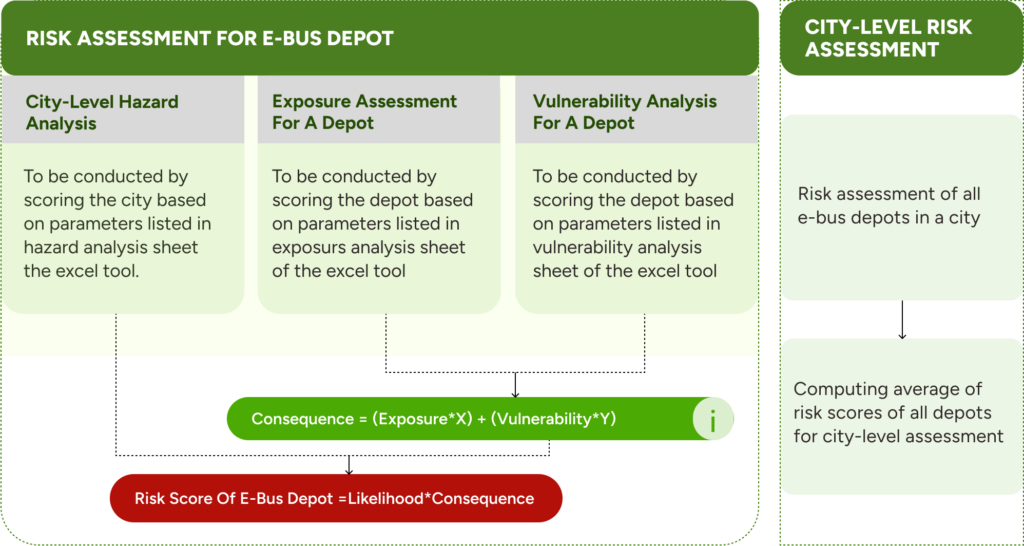
The first step of building resilient e-bus system is diagnosing the key hazards that can potentially impact the e-bus system in a city. A tailored Risk Assessment Framework is developed for conducting the analysis for Electric Bus Depots based on Bivariate Risk Matrix Method developed by the Asian Development Bank (ADB, 2016). It provides a structured, data-driven approach to identifying and evaluating the risk levels of the e-bus depots. The key components of the Risk Assessment Framework are Hazard, exposure and vulnerability.
Hazard Likelihood and Intensity
Assesses the probability and severity of natural (e.g., floods, cyclones, earthquakes), technological (e.g., battery fires, cyber threats), and human-induced (e.g., accidents, vandalism) hazards.
Exposure
Measures the quantum of assets and operations at risk, including the e-bus fleet, depot infrastructure, charging systems, and operating environment.
Vulnerability
Evaluates the susceptibility of system components to damage, based on factors such as training, safety protocols, infrastructure quality, and institutional preparedness.
Risk Assessment Framework at a glance
While the original methodology recommends 70% and 30% weightage for exposure and vulnerability respectively, cities or public bus agencies are encouraged to adjust the weightages based on their local conditions, risk profiles, and planning priorities for the e-bus depot under evaluation. The indicative examples for customising the weightages in consequence formula are illustrated below.
Depot A – High Physical Exposure but Strong Systems
Scenario: E-bus depot and operational routes fall in low-lying/ flood prone zones, but transport agency has robust disaster preparedness and climate response protocols.
Weights: Exposure = 70%, Vulnerability = 30%
Depot B – Detailed Vulnerability Data Available
Scenario: The depot fewer buses. The institutional protocols, ICT integration in its transport systems is in place
Scenario: The city is not highly exposed to natural hazards. It is in the early stages of e-bus deployment, with untested SOPs and limited grid planning.